

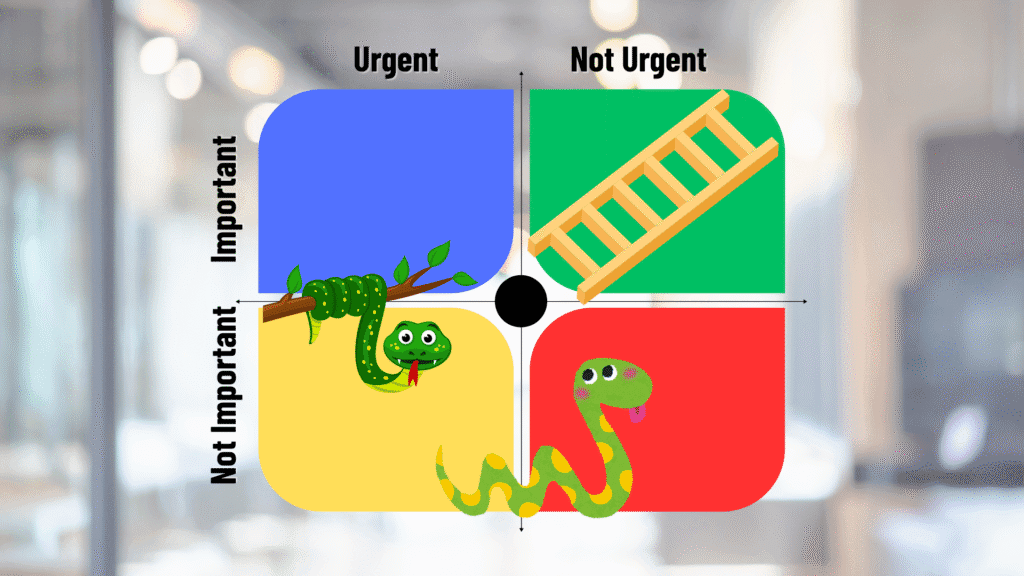
Stephen Covey famously categorized work into four quadrants based on “importance” and “urgency.” The clear directive is to eliminate tasks that are neither urgent nor important, and to minimize those that are urgent but unimportant. This leaves us with the critical tension between the “Important and Urgent” and the “Important but Not Urgent.”
In today’s fast-paced business environment, with increasing competition and demands for productivity, it’s no surprise that many Small and Medium-Sized Business (SMB) leaders feel they spend most of their time battling tasks that are both important and demand immediate attention. But what’s the true cost of constantly operating in this reactive mode?
The “Snakes and Ladders” Dilemma for SMB Leaders
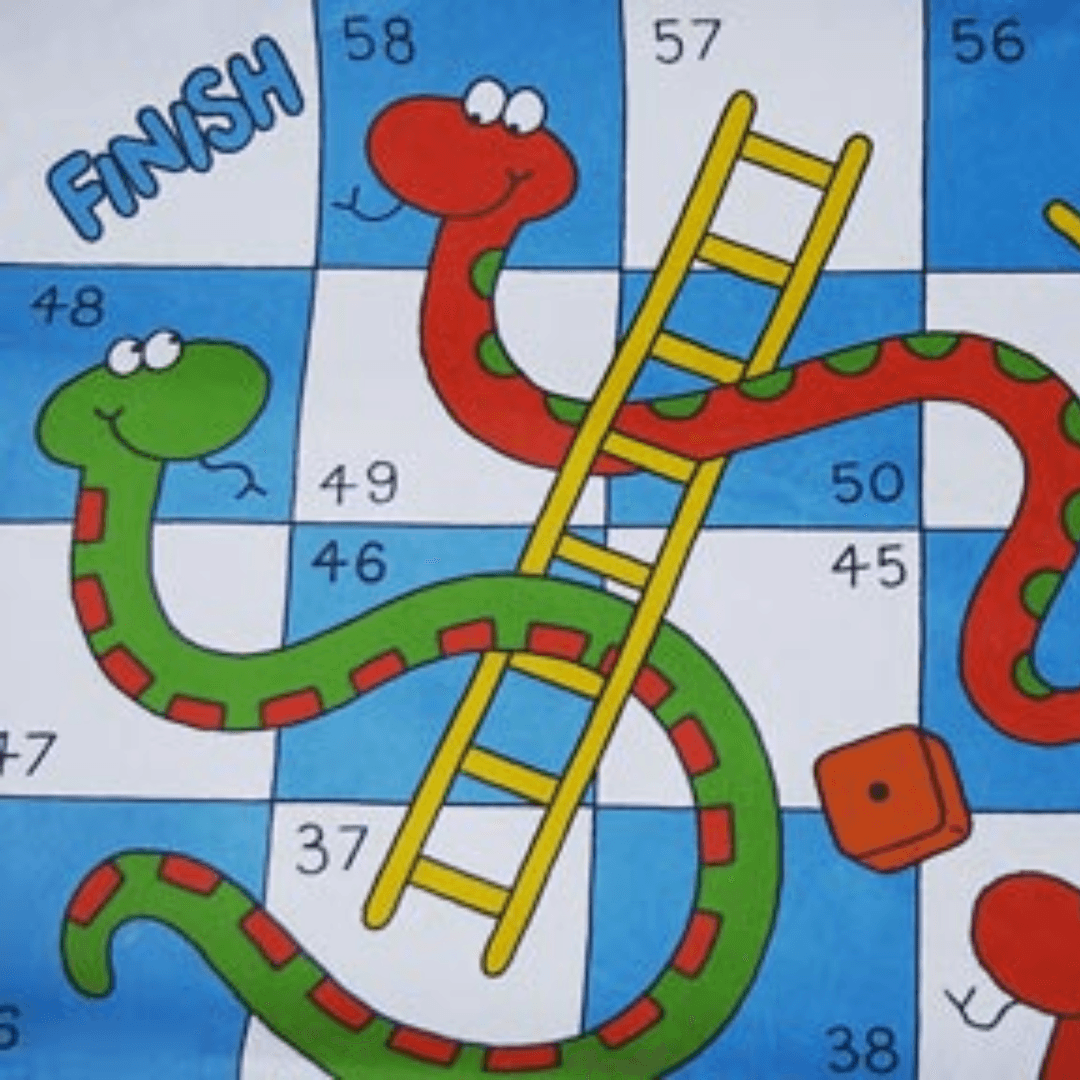
I liken this challenge to the childhood game of Snakes and Ladders.
- The “Snakes”: These are the important and urgent tasks that inevitably arise: critical client issues, regulatory changes, unexpected operational disruptions. Dealing with them is essential, but the time spent often feels like it’s setting you back, pulling you away from forward progress.
- The “Ladders”: These represent the important but not (immediately) urgent tasks: strategic planning, developing new capabilities, investing in your team, optimizing core processes, exploring innovative technologies. These are the activities that propel your business forward in the long run.
The danger is that with the constant barrage of “snakes,” it becomes increasingly difficult to dedicate time and focus to “ladder building.” This creates a self-reinforcing cycle: the more time spent fighting fires (snakes), the less time available for fire prevention and strategic advancement (ladders), leading to an even denser “snake pit” over time.
Breaking the Cycle: Prioritizing Ladder Construction
The only way for SMB leaders to break this reactive cycle and achieve sustainable growth is to consciously, proactively, and consistently focus time and resources on building a few critical “ladders,” even when the snakes are swarming. As your fractional CIO, a key part of my role is to help you identify and build these strategic IT-related ladders. Consider these foundational ones:
- Validate True “Importance” (And Urgency):
- With a high volume of “urgent” demands, it’s easy for less important tasks to sneak in, disguised as critical. Regularly challenge and validate your criteria for what truly constitutes “important.” What was vital a few years ago might have shifted. Sometimes, a few clarifying questions can reveal that perceived urgency isn’t real, freeing up valuable bandwidth.
- Focus on Getting the Right People & Partners on the Bus:
- In challenging times, having a top-performing, engaged team is non-negotiable. You can’t afford to just fill seats. Take the time to find top talent, build an engaged culture, and ensure your key partners (including technology vendors) are truly aligned with your strategic goals. A fractional CIO often helps assess and build the right internal or external tech talent/partnerships.
- Delegate Effectively to Empower Your Team:
- Once you have the right people and a strong culture, leverage them. Many leaders, especially those who rose through the ranks as “doers,” struggle to delegate critical (urgent/important) tasks. However, if you’ve built a capable team, empowering them to handle these challenges is often the only way to free your time for essential strategic ladder-building.
- Streamline Work and Optimize Processes:
- Lean, efficient processes are vital for freeing up time from “snake fighting.” Re-examine the value delivered by each step in your key processes and eliminate anything that doesn’t directly contribute. You might be surprised by how much inefficiency can be removed. Technology and automation, guided by a clear IT strategy, are powerful enablers of this streamlining.
What’s Next
Building these foundational ladders, ensuring strategic focus, cultivating a strong team, delegating effectively, and optimizing processes, won’t eliminate all the “snakes.” But it will equip your SMB to handle them more efficiently and, crucially, create the capacity to rise above the daily swarm and proactively build for the future, leaving competitors stuck in the pit.
Is your SMB leadership team caught in a “snake pit,” struggling to find time for strategic “ladder building”? If you’re looking for an experienced partner to help you prioritize, streamline operations, and leverage technology to build those critical ladders for growth, let’s connect with Succeed Sooner Consulting.
Leave a Reply